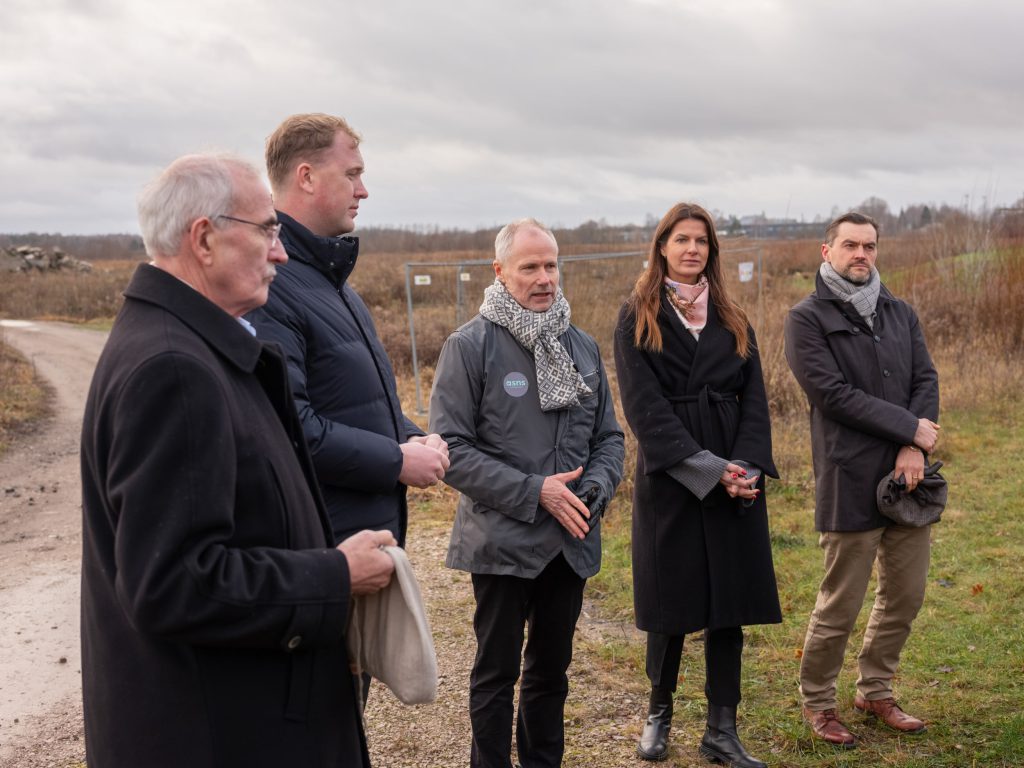
The construction of the “ASNS Ingredient” factory is planned to be completed at the end of 2026, and it will be the world’s most modern and second largest pea protein production plant. Edgars Ruža, the board member of “ASNS Ingredient” states that the project is technologically complex and faced many challenges during its development, but now the next phase of the project has started. “Almost 10-hectare territory where the new factory will be located in Jelgava on Prohorova Street has been handed over to the builder – SIA “Bukoteks”, which has already started construction work. We plan that the factory will be able to reach maximum capacity at the end of 2027, but initially the company will have to conquer the market, which will be a gradual process, and we have set aside about two years for this. It should be noted that the production process of pea isolate is technologically very complex and investment-intensive, therefore, in addition to the construction of the factory, the external partners of “ASNS Ingredient” will also develop heat and energy supply, water treatment and biogas production, which will be offered on the market as external services. Thus, the total investment in the project will reach more than 150 million euros,” notes E.Ruža.
The new factory will process 70,000 tonnes of peas per year and produce pea protein isolate, starch, protein concentrate and fiber. Peas, which will be the basic raw material used in production, are planned to be purchased from Latvian farmers, and the produced products are planned to be exported all over the world. “We can already see that there is a great demand for this type of products, because in many parts of the world there is a lack of opportunities to procure food in sufficient quantities, so it is urgent to produce substitutes for specific products. These products can be used in the food, medical and agricultural sectors, creating additional opportunities for innovation,” emphasizes E.Ruža.